IMCUSTOMEYE
  • Home
  • ABOUT US
    • The Project
    • The PARTNERS >
      • CSIC
      • University of Liverpool
      • NUI Galway
      • PAN
      • IOFV
      • UCL/Moorfields Eye Hospital
      • IROC Science
      • Optimo Medical
      • Oculus
      • 2EyesVision
  • NEWS
  • BLOG
  • Videos
  • LIBRARY
    • Flyers
    • Newsletters
    • Deliverables
  • CONTACT

Biomechanics, IOP and Glaucoma

9/17/2021

0 Comments

 
by Soledad Aguilar Munoa, Glaucoma Surgical Trials Fellow at Moorfields Eye Hospital

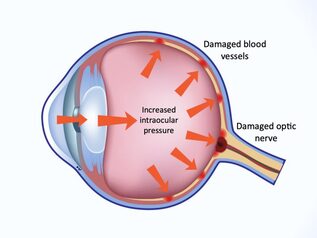
Glaucoma is the leading cause of irreversible blindness worldwide, with an estimate of 65.5 million people suffering from primary open-angle glaucoma in 2020.  Despite the multifactorial nature of the disease, to date, intraocular pressure (IOP) is the only modifiable risk factor. For this reason, the accuracy of IOP measurement is crucial in the screening, diagnosis, and management of glaucoma.  
Picture
The clinical methods for determining IOP are subject to multiple sources of error, which result in clinically relevant inaccuracies. In particular, the biomechanical properties of the cornea have shown to be an important source of measurement error that could account for major deviations from the true IOP.  

Biomechanics is the application of mechanical engineering principles to living organisms. Viscosity is the quantity that describes a fluid's resistance to flow. Elasticity is the property of solid materials to return to their original shape and size after the forces deforming them have been removed. The cornea exhibits a viscoelastic behaviour. This means that it shares characteristics with viscous and elastic materials. 

Several devices have attempted to measure the biomechanical properties of the cornea in order to correct IOP measurements. Of those, the Ocular Response Analyzer (Reichert, Inc., Depew, NY) and the Corvis ST (OCULUS Optikgeräte GmbH, Wetzlar, Germany) are the most widely used.  

However, as IOP measurements are influenced by biomechanics, the measurement of corneal biomechanics in vivo is strongly influenced by IOP, and uncoupling one parameter from the other proves highly challenging. 

The devices designed within the scope of IMCUSTOMEYE project will aim at performing more accurate measurements of intraocular pressure and corneal biomechanical properties and will hopefully contribute to better glaucoma care and increased knowledge about the nature of the disease. 
0 Comments


Leave a Reply.

Proudly powered by Weebly
  • Home
  • ABOUT US
    • The Project
    • The PARTNERS >
      • CSIC
      • University of Liverpool
      • NUI Galway
      • PAN
      • IOFV
      • UCL/Moorfields Eye Hospital
      • IROC Science
      • Optimo Medical
      • Oculus
      • 2EyesVision
  • NEWS
  • BLOG
  • Videos
  • LIBRARY
    • Flyers
    • Newsletters
    • Deliverables
  • CONTACT